advanced
Bharatanatyam Varnam: The Centerpiece of the Margam
The varnam is the longest and most demanding item in a Bharatanatyam margam. Here is how it is built, what it asks of a dancer, and when a student is ready.
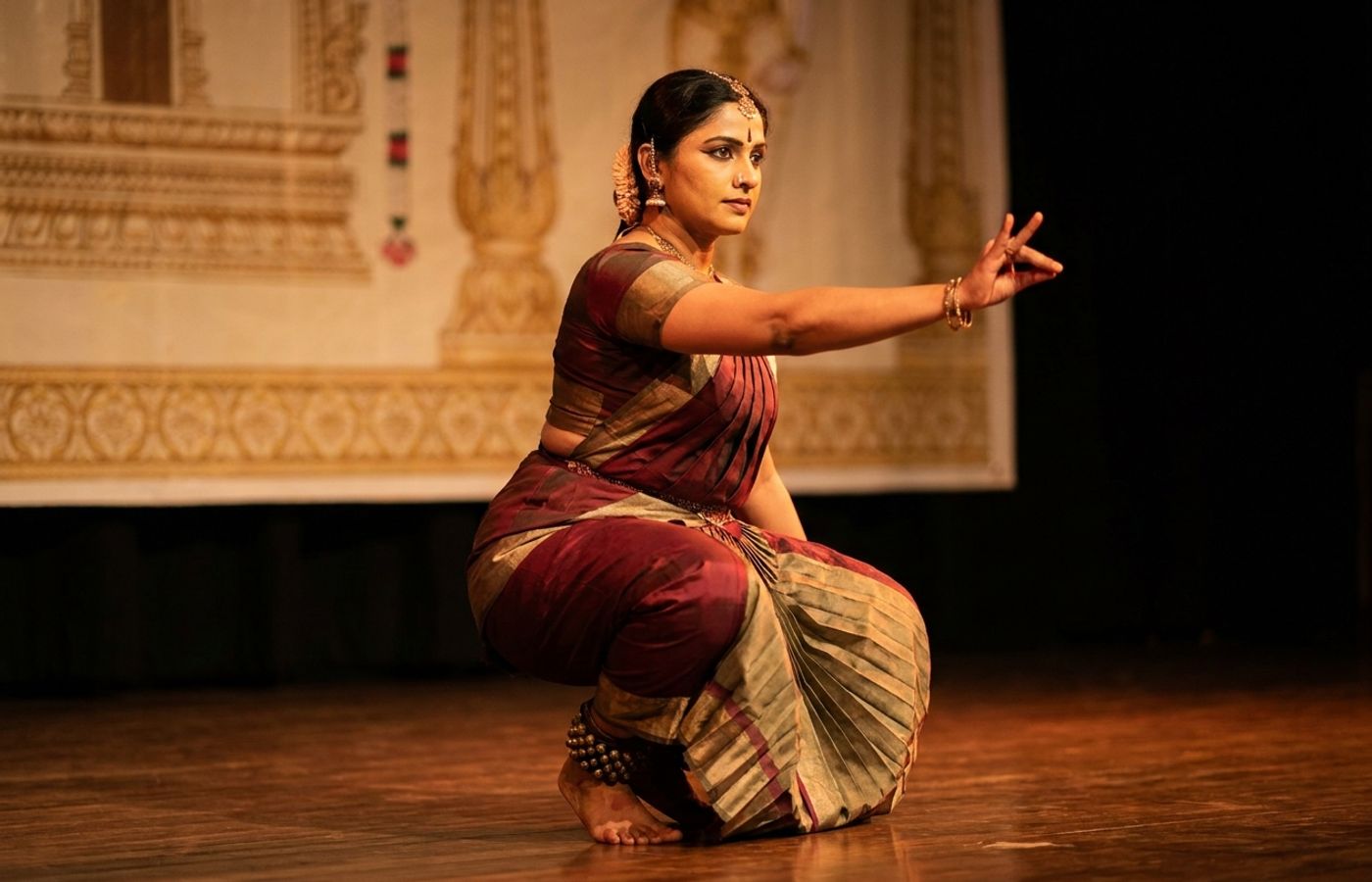
Ask any senior student what changed their dancing, and the answer is usually the same: the first varnam. A Bharatanatyam varnam is the longest, densest, and most demanding item in the traditional repertoire, and it is the point at which a student stops executing steps and starts carrying a performance. Everything learned before it, the adavus, the aramandi, the hastas, the first attempts at abhinaya, is gathered into a single piece that can run thirty to forty five minutes without a break. It is not simply a harder dance. It is a different kind of work.
This guide explains what a varnam is, how it is structured, why it is placed where it is in the margam, and how a guru decides that a student is ready to begin one. It is written for our intermediate and advanced students at Sridevi Dance Academy in Lexington, Kentucky and for the online students across the diaspora who are working toward the same milestone.
What a Bharatanatyam varnam actually is
A varnam is a composition that deliberately balances the two halves of the art. Nritta, the pure rhythmic dance with no narrative meaning, and nritya, the expressive dance that communicates a text through abhinaya. Most items in the repertoire lean heavily one way. The jathiswaram is almost entirely nritta. The padam is almost entirely abhinaya. The varnam refuses to choose. It alternates between them, line by line, for its full length, and it does so at increasing levels of difficulty.
The literary content, the sahitya, is usually short. A handful of lines. What makes the piece long is what the dancer does with them. Each line of text is danced with abhinaya, then answered by a jathi, a passage of rhythmic syllables set to the tala and danced as pure nritta. That call and response repeats through the composition. A varnam therefore tests memory, stamina, rhythmic accuracy, and emotional range at the same time, which is exactly why it sits where it does.
Where the varnam sits in the margam
The margam is the traditional concert order of a Bharatanatyam recital, and it is arranged as a deliberate arc. It opens with invocatory and technical pieces, builds to a peak, then releases. The pushpanjali or alarippu warms the body and offers salutations. The jathiswaram develops rhythmic vocabulary with no text at all. The shabdam introduces the dancer to short passages of meaning.
The varnam is the peak. It is placed roughly at the center of the recital, when the dancer is warm but not yet spent, and it occupies more time than the pieces around it combined. After it, the recital descends: padams and javalis that are almost entirely abhinaya, a tillana that returns to pure rhythm at high speed, and a closing mangalam. Remove the varnam and the margam has no summit. That structural weight is the reason a guru does not assign one casually.
Pada varnam and tana varnam
Two kinds of varnam share the name, and students often conflate them. The tana varnam belongs primarily to the Carnatic music concert. It is built to display the raga and is dominated by swara passages, with sparse text. The pada varnam, sometimes called the chauka varnam, is the dance varnam. It is set in a slower tempo, carries considerably more sahitya, and leaves the space an abhinaya artist needs to sit inside a line and open it.
Bharatanatyam works overwhelmingly with the pada varnam. The Thanjavur Quartet, the four brothers who shaped much of the modern Bharatanatyam repertoire in the nineteenth century, composed pada varnams that are still central to the form. Compositions such as Roopamu Juchi in raga Todi and Mathe Malayadhwaja in raga Khamas remain staples of the concert stage. A tana varnam is occasionally choreographed for dance, but it is the exception rather than the standard.
The architecture: purvanga and uttaranga
A varnam divides into two halves. The purvanga, the first half, contains the pallavi, the anupallavi, and the muktayi swara. The uttaranga, the second half, contains the charanam followed by a series of chittaswaras, also called ettugada swaras, each with its own line of sahitya.
The first half is generally slower and more expansive. Lines are repeated, elaborated, and returned to, and the dancer has room to develop a single idea at length. The second half accelerates. The chittaswara passages arrive in sequence, each shorter and quicker than the material before it, and the demand on breath and precision rises steadily toward the end. A dancer who paces the purvanga badly will not survive the uttaranga cleanly. Learning to distribute energy across those two halves is one of the real lessons of the piece.
Jathis, trikala, and the nattuvanar
The jathi is the rhythmic spine of the varnam. It is a composed sequence of solkattu, the spoken rhythmic syllables, recited by the nattuvanar who keeps tala on the cymbals. The dancer answers those syllables with adavus in strict time. Many varnams open with a trikala jathi, the same rhythmic phrase performed in three speeds, which announces immediately that the piece will test tala control rather than merely decorate it.
This is where years of adavu practice pay their dividend. In a jathi there is nowhere to hide. The aramandi must hold, the arms must be at the correct height, the feet must land exactly with the syllable, and the face must remain composed while the body works hard. Students who treated adavu drill as a chore discover in their first varnam that the drill was the whole point.
Abhinaya and sanchari: where the varnam becomes a story
Between the jathis, the varnam becomes theatre. Most pada varnams are written in nayaka nayika bhava, the language of the heroine and the hero, where longing for a deity is expressed through the vocabulary of human love. The nayika may be waiting, pleading, reproachful, or confident. The nayaka is often Shiva, Murugan, Krishna, or Rama, addressed directly and by name.
A single line of sahitya can be danced many times over, and each repetition is not decoration but interpretation. This is the domain of sanchari bhava, the elaborations in which the dancer leaves the literal line and enacts an episode that illuminates it. A phrase about the lord of a particular temple may open into the story of that deity. A phrase about waiting may become a small scene of a messenger sent and not returning. Sanchari is where a guru's own understanding, drawn from her lineage, is transmitted directly to the student, and it is the reason two dancers performing the same varnam do not perform the same piece.
The stamina a varnam demands
Physical preparation for a varnam is deliberate and slow. A dancer holds aramandi for the great majority of a thirty to forty five minute item, in full costume, with ankle bells, under stage lights, while smiling. That load cannot be built in a few weeks, and attempting it in a rush is how injuries to knees, ankles, and lower back happen.
We build it in stages. Sections are learned separately and drilled to clean execution before they are joined. Half the varnam is run at performance intensity long before the whole is attempted. Breath is trained alongside movement so that the dancer is not gasping through the abhinaya passages that follow a hard jathi. Only in the final phase is the complete piece run end to end with music, and by then the body already knows the shape of the effort. Precision and safe progression are not separate from artistry here. They are what make the artistry possible.
When a student is ready to begin one
There is no fixed year at which a varnam is assigned. It depends on the student, not the calendar. In practice, a guru looks for a settled aramandi that does not rise under fatigue, clean and confident execution across the full range of adavus, reliable tala sense without counting aloud, comfortable use of hastas without hesitation, and enough maturity in abhinaya to sustain a mood rather than illustrate a word. In most serious training this arrives after several years of consistent study, and it typically marks the beginning of arangetram preparation.
Readiness is also a matter of temperament. A varnam rewards patience. Students who want to finish quickly tend to struggle with it, and students who are willing to repeat a single line for weeks tend to grow rapidly. In our classes in Lexington, Kentucky and in our online batches for diaspora families, we begin the conversation about a varnam only when both the technique and the patience are there.
Learning the varnam under one guru
The varnam is transmitted, not distributed. In guru shishya parampara the choreography, the sanchari elaborations, and the interpretive choices come from a single teacher within a single lineage, and they are adjusted for the student in front of her. Video references and recordings are useful for revision, but a varnam assembled from several unrelated sources tends to lack coherence, and audiences feel that even when they cannot name it.
That is why we keep varnam training close and consistent, whether a student is in the studio in Lexington or joining online from another state. The piece is taught line by line, corrected in real time, and revisited over months. If you are considering serious classical training for your child or returning to the art as an adult, the varnam is a good way to understand what the full road looks like. It is long, it is demanding, and it is the moment the training becomes dance.
Common questions
What is a varnam in Bharatanatyam?
A varnam is the central and most elaborate item in a Bharatanatyam margam. It deliberately combines nritta, pure rhythmic dance, with nritya, expressive dance set to a text, alternating between rhythmic jathis and abhinaya passages across two structural halves called the purvanga and the uttaranga.
How long does a Bharatanatyam varnam last?
A pada varnam commonly runs between thirty and forty five minutes, and some are longer. It is by far the longest item in a traditional recital, which is why it is placed near the centre of the margam when the dancer is warm but not yet fatigued.
What is the difference between a pada varnam and a tana varnam?
A tana varnam belongs mainly to the Carnatic music concert and is dominated by swara passages with sparse text. A pada varnam, also called a chauka varnam, is the dance varnam. It moves at a slower tempo and carries more sahitya so the dancer has room for abhinaya and sanchari.
When is a student ready to learn a varnam?
When the aramandi holds under fatigue, the adavus are clean across the full range, tala sense is reliable without counting aloud, hastas are automatic, and abhinaya can sustain a mood. This usually follows several years of consistent training and often marks the start of arangetram preparation.
How long does it take to learn a varnam?
Several months is typical, and longer is common. The piece is learned in sections, drilled separately, then joined, with stamina and breath built gradually. Rushing a varnam is the most frequent cause of knee and ankle strain, so a guru will set the pace to the student.
Can a varnam be learned in online classes?
Yes, provided the teaching is consistent and the guru can see the student clearly enough to correct posture and timing in real time. We teach varnams both in person in Lexington, Kentucky and online for diaspora families, keeping the choreography and sanchari within one lineage rather than assembling it from mixed sources.