parent guide
Bharatanatyam Classes for Kids: A Parent’s Guide to Safe, Authentic Learning
Discover how kids can safely learn authentic Bharatanatyam with expert guidance—whether in Lexington, KY or online. Practical tips for parents included.
What Is Bharatanatyam? Tradition Meets Today’s Family
Bharatanatyam is India’s oldest classical dance form, celebrated for its expressive storytelling, vibrant rhythms, and disciplined movement. Rooted in Tamil Nadu’s temple traditions, it has evolved into a structured art accessible worldwide. For children, Bharatanatyam offers more than just dance—it builds confidence, discipline, and cultural connection.
At Sridevi Dance Academy in Lexington, Kentucky, we honor the classical lineage while making learning approachable for today’s families. Whether your child is a beginner or you seek online classes for your diaspora family, our curriculum is designed to nurture both skill and spirit.
Is Bharatanatyam Good for Kids? Benefits Beyond Dance
Parents often ask if Bharatanatyam is suitable for children. The answer is a resounding yes—when taught with care and respect. This dance form trains the body and mind, developing balance, strength, memory, and focus. Early exposure to Bharatanatyam helps children appreciate Indian culture and heritage in a joyful, active way.
At Sridevi Dance Academy, safety and encouragement are our priorities. Each child learns at their own pace, starting with simple steps, basic postures, and gentle rhythms. Through consistent practice and patient guidance, children gain not only artistic skills but also self-assurance and lifelong discipline.
- Improves posture and physical coordination
- Boosts memory, listening, and concentration
- Encourages teamwork and self-expression
- Connects kids to Indian cultural roots
Getting Started: Fundamentals for Young Beginners
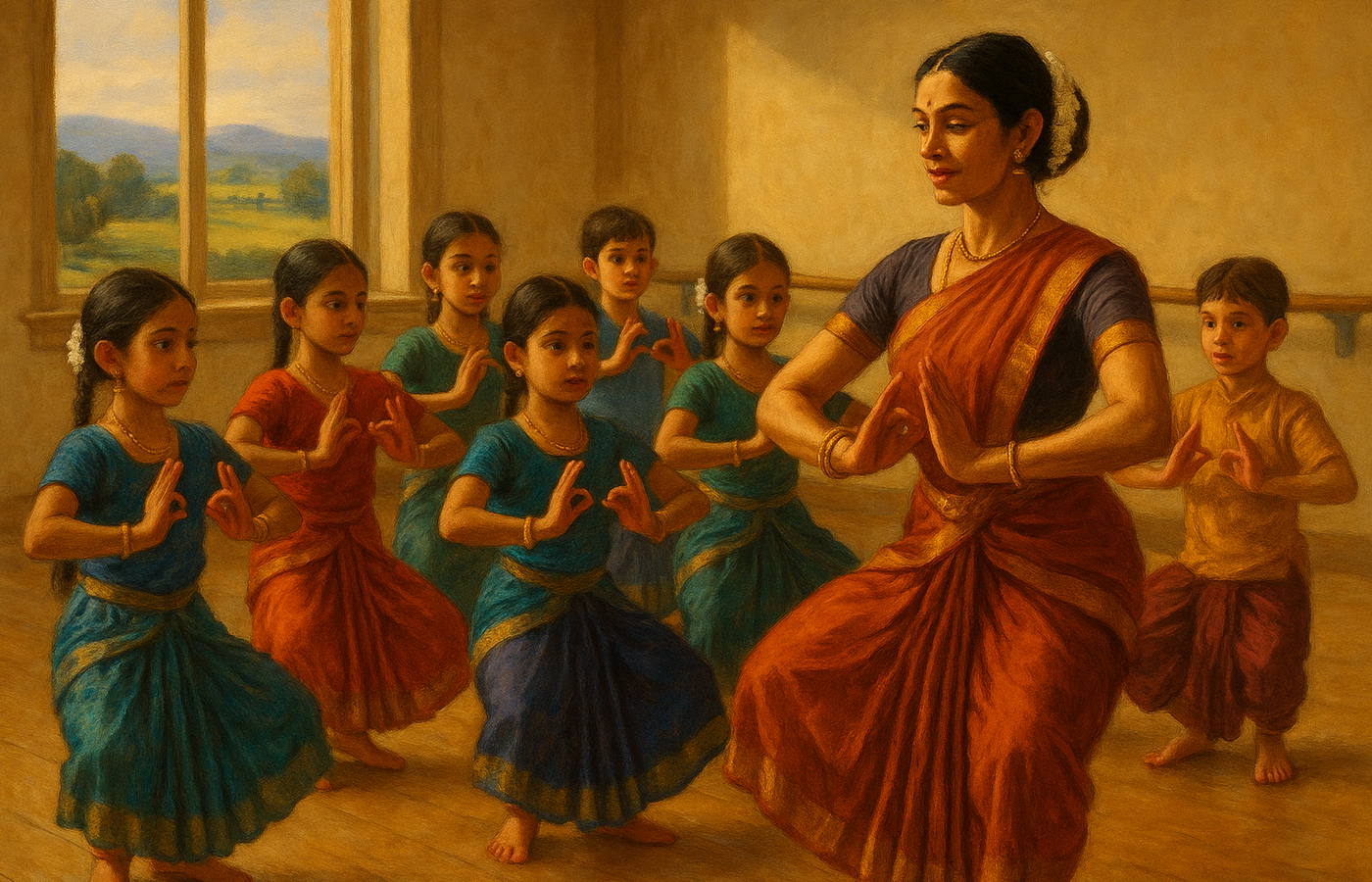
Every Bharatanatyam journey begins with fundamentals. The key for kids is a strong foundation—safe, incremental, and joyful. We begin with the concept of 'aramandi' (the essential half-sitting posture), basic hand gestures (mudras), and simple rhythmic patterns (adavus).
Proper posture is central to safety and confidence. Children are gently guided to align their spine, relax their shoulders, and bend their knees. Practice starts slowly, often with music and clapping to internalize rhythm. Our Lexington studio and online classes both emphasize frequent rest and positive reinforcement, ensuring children avoid strain or confusion.
In the first weeks, students focus on body awareness, coordination, and learning Sanskrit dance terms. The goal is comfort, not perfection. Only when these basics are strong do we introduce more complex steps and expressive storytelling.
How Long Does It Take to Learn Bharatanatyam?
Bharatanatyam is a lifelong art, but children can enjoy progress right from the start. Most beginners, with weekly classes, will learn foundational steps and short routines within six months. Mastery, such as preparing for a solo performance (arangetram), often takes several years of steady practice.
Each child’s journey is unique. At Sridevi Dance Academy, we celebrate every milestone—whether it’s mastering a new adavu, remembering a sequence, or simply dancing with confidence. Our curriculum is designed for gradual progression, so students feel motivated and never rushed.
Parents are encouraged to observe, support practice at home, and communicate openly with their child’s guru. Consistency, encouragement, and patience are key.
- First steps & posture: 3–6 months
- Simple dances: 1–2 years
- Advanced storytelling & solo prep: 4+ years
Bharatanatyam vs Kathak for Children: Making the Right Choice
Many parents compare Bharatanatyam with other Indian classical forms, like Kathak, when selecting a dance class for their child. Both styles offer rich cultural experiences, but their techniques and philosophies differ.
Bharatanatyam is characterized by grounded postures, angular movements, and expressive storytelling through facial expressions and hand gestures. Kathak, on the other hand, is more upright, with spins and intricate footwork. For children who enjoy structured routines and dramatic narratives, Bharatanatyam is often a wonderful fit.
The most important factor is the quality of instruction and your child’s comfort. We invite families to schedule a trial class to discover which style resonates most with their child’s personality and learning style.
Learning Options: Lexington, Kentucky & Online Bharatanatyam Classes
Sridevi Dance Academy proudly offers in-person Bharatanatyam classes for kids at our welcoming Lexington, Kentucky studio. Here, students benefit from direct guru guidance, individualized corrections, and the energy of a supportive community.
For families outside Lexington or those seeking flexible options, our structured online Bharatanatyam classes provide the same authentic curriculum. Live video lessons, interactive feedback, and clear progression ensure that children learn safely and feel connected—no matter where they are.
Our hybrid approach makes it easy to begin at any level. Whether you prefer in-person, online, or a blend of both, we encourage you to explore Bharatanatyam classes or schedule a trial class to find the best fit for your family.
Safe Practice at Home: Tips for Parents and Kids
Supporting your child’s Bharatanatyam journey at home is simple with a few mindful habits. Always ensure your child warms up with gentle stretching before practice. Choose a clear, non-slippery space, and encourage taking breaks to avoid fatigue.
It’s important to prioritize correct posture over speed or repetition. If your child is practicing online, position the device so the guru can see their whole body and offer feedback. Above all, keep practice sessions short and joyful, reinforcing that progress is about steady improvement—not perfection.
Parents don’t need a dance background to be supportive. Your encouragement, regular attendance, and willingness to celebrate small wins go a long way in building your child’s confidence.
- Warm up and stretch before dancing
- Practice on a safe, clear surface
- Take breaks and listen to the body
- Focus on posture and basics
- Encourage questions and communication with the guru
From Fundamentals to Mastery: What’s Next?
As your child grows, so does their Bharatanatyam journey. After mastering the basics, students progress to more complex adavus (step combinations), abhinaya (expressive storytelling), and eventually full-length dances. Advanced students may prepare for arangetram—a milestone solo performance that honors years of dedication.
At Sridevi Dance Academy, we support each student’s goals, whether they’re dancing for joy, cultural connection, or artistic achievement. Our structured curriculum, attentive teaching, and welcoming community offer a clear, safe path from first steps to mastery.
Ready to begin or deepen your child’s dance journey? Explore our Bharatanatyam classes, schedule a trial class, or learn more about our academy and teaching philosophy today.
Common questions
What age can my child start Bharatanatyam classes?
Most kids can begin Bharatanatyam from age 5 or 6, when they can follow instructions and enjoy group learning.
Is Bharatanatyam safe for young children?
Yes. With proper guidance and gradual progression, Bharatanatyam is safe and builds strength, balance, and discipline.
Do you offer Bharatanatyam classes online?
Yes. Sridevi Dance Academy offers structured online Bharatanatyam classes for kids with live feedback and progression.
How long does it take to become proficient in Bharatanatyam?
Kids typically learn basics in 6–12 months; advanced skills and solo performance require consistent practice over 4+ years.
What do kids need to start Bharatanatyam classes?
Comfortable dance attire, a safe practice space, and an open mind. All other materials and guidance are provided by the academy.