intermediate
Asamyukta Hastas: A Guru's Guide to the 28 Single Hand Gestures
A guru's guide to the 28 asamyukta hastas of Bharatanatyam: what each single hand gesture is, how viniyoga works, and how students learn them properly.
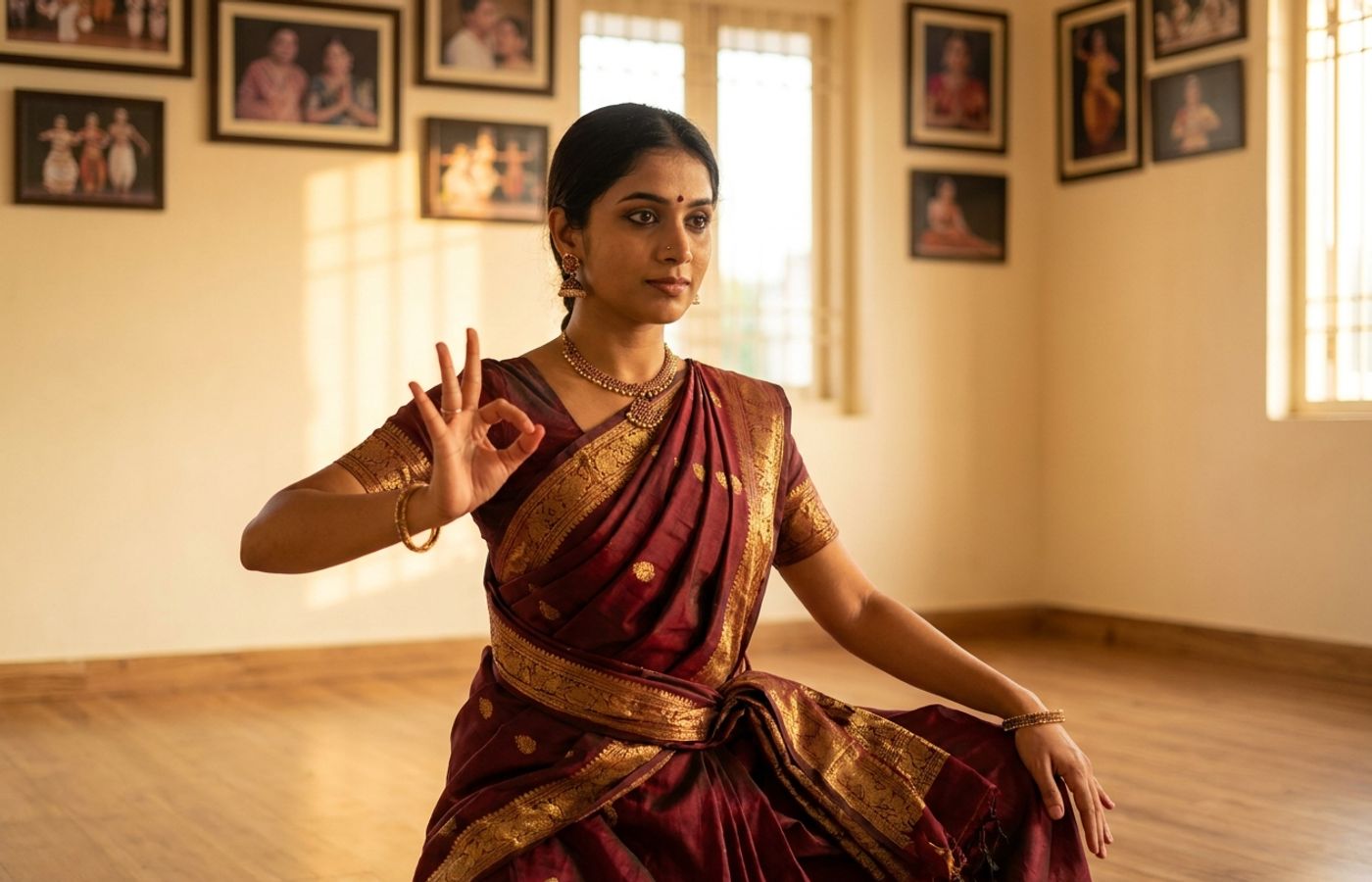
Ask a beginner what the hands do in Bharatanatyam and you will usually hear that they make shapes. Ask a dancer three years into training and the answer changes. The hands do not make shapes. They carry vocabulary. The asamyukta hastas, the single hand gestures of Bharatanatyam, are the first words a student learns in that vocabulary, and everything the hands say later in a varnam or a padam is built from them. There are twenty eight of them in the Abhinaya Darpana, each with a name, a precise form, and a list of prescribed uses. Learning them is not memory work. It is learning to speak.
What Asamyukta Hastas Are
Asamyukta comes from the Sanskrit for not joined, or not combined. Hasta means hand. So asamyukta hastas are the gestures formed by one hand alone, in contrast to the samyukta hastas, which require both hands working together. The Abhinaya Darpana of Nandikeshvara, the text most Bharatanatyam students are taught from, lists twenty eight asamyukta hastas and twenty four samyukta hastas. The older and more encyclopaedic Natya Shastra counts twenty four single hand gestures, using a slightly different set and different names in places. Both traditions are legitimate. Which list a student learns depends on the lineage of the guru, and in our classes we teach the twenty eight of the Abhinaya Darpana.
The distinction between single and double hand gestures is practical, not decorative. A dancer holding one hand in a gesture has the other hand free to do something else, and that freedom is what makes storytelling possible. One hand can be a deer while the other is the hunter. One hand can hold a flute while the other rests on the hip. In the great mythological passages of a varnam, this two voice quality is exactly how a single dancer plays several characters without leaving the stage.
The Twenty Eight Asamyukta Hastas
In the order given by the traditional shloka, the twenty eight asamyukta hastas are: Pataka, Tripataka, Ardhapataka, Kartarimukha, Mayura, Ardhachandra, Arala, Shukatunda, Mushti, Shikhara, Kapittha, Katakamukha, Suchi, Chandrakala, Padmakosha, Sarpashirsha, Mrigashirsha, Simhamukha, Kangula, Alapadma, Chatura, Bhramara, Hamsasya, Hamsapaksha, Sandamsha, Mukula, Tamrachuda, and Trishula.
Students are taught to recite this list in order before they can form all of it correctly, and there is good reason for that. The sequence is not random. Pataka, the flag, is the neutral open palm from which several other gestures are simple modifications. Tripataka folds down the ring finger of Pataka. Ardhapataka folds the little finger as well. Kartarimukha separates the index and middle fingers into a pair of scissors. Learning them in sequence teaches the hand how the family of gestures relates to itself, which is far more durable than learning twenty eight isolated shapes.
Viniyoga: How a Gesture Earns Its Meaning
The form of a hasta is only half the lesson. The other half is viniyoga, the prescribed usage handed down in the shloka that accompanies each gesture. Viniyoga tells the dancer what a given hand can mean. Pataka alone is used for clouds, forest, denial, blessing, a river, entering a street, the night, and many more. Mrigashirsha, the deer head, is used for the animal itself, for cheeks, for women, for a call, and for placing sandalwood paste. Alapadma, the fully opened lotus, is used for a lotus in bloom, a beautiful face, a circular movement, a village, and for the question where.
This is why gesture in Bharatanatyam is not mime. A hasta carries an inherited set of meanings, and the dancer selects from that set. Context does the rest. Placement, direction, speed, and the face all narrow a single hand shape to one precise idea. A Katakamukha held near the ear is an earring. The same Katakamukha lifted and drawn forward can be the plucking of a flower. Nothing about the hand has changed. Everything about the sentence has.
How We Teach the Hastas at Sridevi Dance Academy
In our classes in Lexington, Kentucky, and in our online classes for diaspora families across the country, the hastas begin early and never really finish. A first year student learns the shloka and the forms. A second year student learns the viniyoga and starts using hastas inside adavus and in short abhinaya passages. An advanced student rediscovers the same twenty eight gestures inside a varnam, where they must be produced instantly, at tempo, without looking at the hand.
The method we use is deliberately slow. A student forms the gesture, names it, recites its viniyoga, and then shows two or three of those meanings with the face and the eyes attached. Only then does the gesture move into a phrase. Skipping the naming step is the most common shortcut in modern practice and it is the reason so many dancers can produce a beautiful hand and then have nothing to say with it. Sridevi Thyagarajan began learning Bharatanatyam at the age of four in this same order, and the guru shishya parampara she trained in treats vocabulary before performance as non negotiable.
Common Errors and How to Correct Them
The first error is a soft hand. Bharatanatyam hastas are held with tension through the palm and the fingers, and a relaxed Pataka reads as a limp flag rather than a flag. The correction is not to grip harder but to extend, keeping the fingers pressed together and the thumb properly folded across the base of the index finger where the gesture calls for it.
The second error is a drifting wrist. Many students learn the fingers correctly and then let the wrist collapse, which changes what the audience reads. A gesture is defined by the whole unit of forearm, wrist, and hand, and the wrist should be firm and consciously placed.
The third error is a hand that arrives before the eyes. In classical practice the drishti follows the hasta, and when the eyes wander ahead of the gesture, the phrase loses its focus. This is where drishti bheda training and hasta training meet, and it is why we do not teach them as separate subjects for long.
The fourth error is speed too early. A student who rushes the twenty eight will produce approximations, and approximations harden into habit. We would rather a student hold twelve gestures accurately than flash all twenty eight imprecisely. The remaining sixteen come quickly once the hand understands what precision feels like.
Asamyukta and Samyukta Together
Once the single hand gestures are secure, the samyukta hastas become far easier, because many of them are simply two asamyukta hastas brought into relationship. Anjali is two Pataka hands joined. Kartariswastika crosses two Kartarimukha hands. Hamsapaksha in both hands, angled and layered, becomes Garuda. A student who knows the twenty eight thoroughly has already done most of the work of learning the twenty four.
This is the practical argument for patience. Families sometimes ask whether the hand gesture syllabus can be compressed to get a child into performance repertoire sooner. It can be rushed, but the cost appears later, usually in the varnam years, when abhinaya requires the dancer to think in gestures rather than recall them. Vocabulary learned properly at eight is still available at eighteen.
Practising the Hastas at Home
Hasta practice is one of the few parts of Bharatanatyam that needs no space, no floor, and no music. A student can sit and run the twenty eight in order in under two minutes. We ask students to do this daily, and to add one layer each week: first the names, then the viniyoga, then the eyes, then a short line of a song interpreted only with the hands. Parents supporting a young dancer at home do not need to know the gestures themselves. It is enough to ask the child to name each one as she forms it, because naming is the part that most often gets dropped.
For students learning with us online, we film hasta close ups from the dancer's own angle rather than the mirror angle, since the most common online learning error is a reversed thumb or a mirrored finger fold that goes unnoticed for weeks. A short weekly check of the hands on camera catches this early.
Where the Hastas Lead
The asamyukta hastas are the smallest complete unit of meaning in Bharatanatyam. Nritta uses them as pure shape. Nritya uses them as language. By the time a dancer reaches a padam, where the feet grow quiet and the whole piece rests on the face and the hands, the twenty eight are no longer twenty eight items on a list. They are the way she thinks. That transformation is the real syllabus, and it begins with one open palm held correctly on the first day of class.
Common questions
What are asamyukta hastas in Bharatanatyam?
Asamyukta hastas are the single hand gestures of Bharatanatyam, formed with one hand alone. Asamyukta means not joined in Sanskrit and hasta means hand. The Abhinaya Darpana lists twenty eight of them, each with a fixed form, a name, and a prescribed set of meanings called viniyoga.
How many asamyukta hastas are there?
The Abhinaya Darpana of Nandikeshvara gives twenty eight asamyukta hastas, which is the list taught in most Bharatanatyam schools including ours. The older Natya Shastra describes twenty four single hand gestures with some differences in naming and form. Both counts are traditionally correct, and which one a student learns depends on the lineage of the guru.
What is the difference between asamyukta and samyukta hastas?
Asamyukta hastas use one hand and samyukta hastas use both hands together. There are twenty eight asamyukta and twenty four samyukta hastas in the Abhinaya Darpana. Many samyukta gestures are built from two single hand gestures brought into relationship, so students who know the asamyukta hastas well learn the samyukta set much faster.
What does viniyoga mean?
Viniyoga is the prescribed usage of a hasta, handed down in the shloka that accompanies each gesture. It lists what the gesture may represent. Pataka, for example, is used for clouds, a forest, a river, denial, and blessing. The dancer chooses from that inherited set, and the face, direction, and placement make the exact meaning clear.
How long does it take to learn all twenty eight hastas?
Most students can form all twenty eight within a few months of steady practice, but forming them is only the beginning. Adding the viniyoga, then the eyes and facial expression, then using the gestures at tempo inside repertoire takes years. We prefer accuracy over speed and would rather a student hold twelve gestures correctly than approximate all twenty eight.
Can hand gestures be learned properly in online Bharatanatyam classes?
Yes, provided the hands are checked on camera regularly. We teach students in Lexington, Kentucky and online across the diaspora, and for online students we film hasta close ups from the dancer's own viewing angle rather than the mirror angle. This prevents reversed thumbs and mirrored finger folds, which are the most common errors when hands are learned through a screen.